

Cuts with a cutter are among the most frequent accidents at work. A simple moment of inattention, a movement that is too quick, a bad habit, or the use of an unsuitable tool can be enough to cause an injury. In companies, hand cuts represent approximately 21% of workplace accidents.
Continue reading “WHAT TO DO IN CASE OF A CUT WITH A CUTTER?”Category: Our Advice
How to choose a professional utility knife suited to your trade?
Whether you are a tradesperson, a logistics professional, or an industrial worker, selecting a professional utility knife tailored to your specific activity is crucial for ensuring efficiency, precision, and safety.
An inappropriate choice can lead to wasted time, premature tool wear, and even occupational accidents.
In this article, we guide you through the essential criteria for selecting the ideal utility knife based on your specific industry or application.
Continue reading “How to choose a professional cutter adapted to your trade?”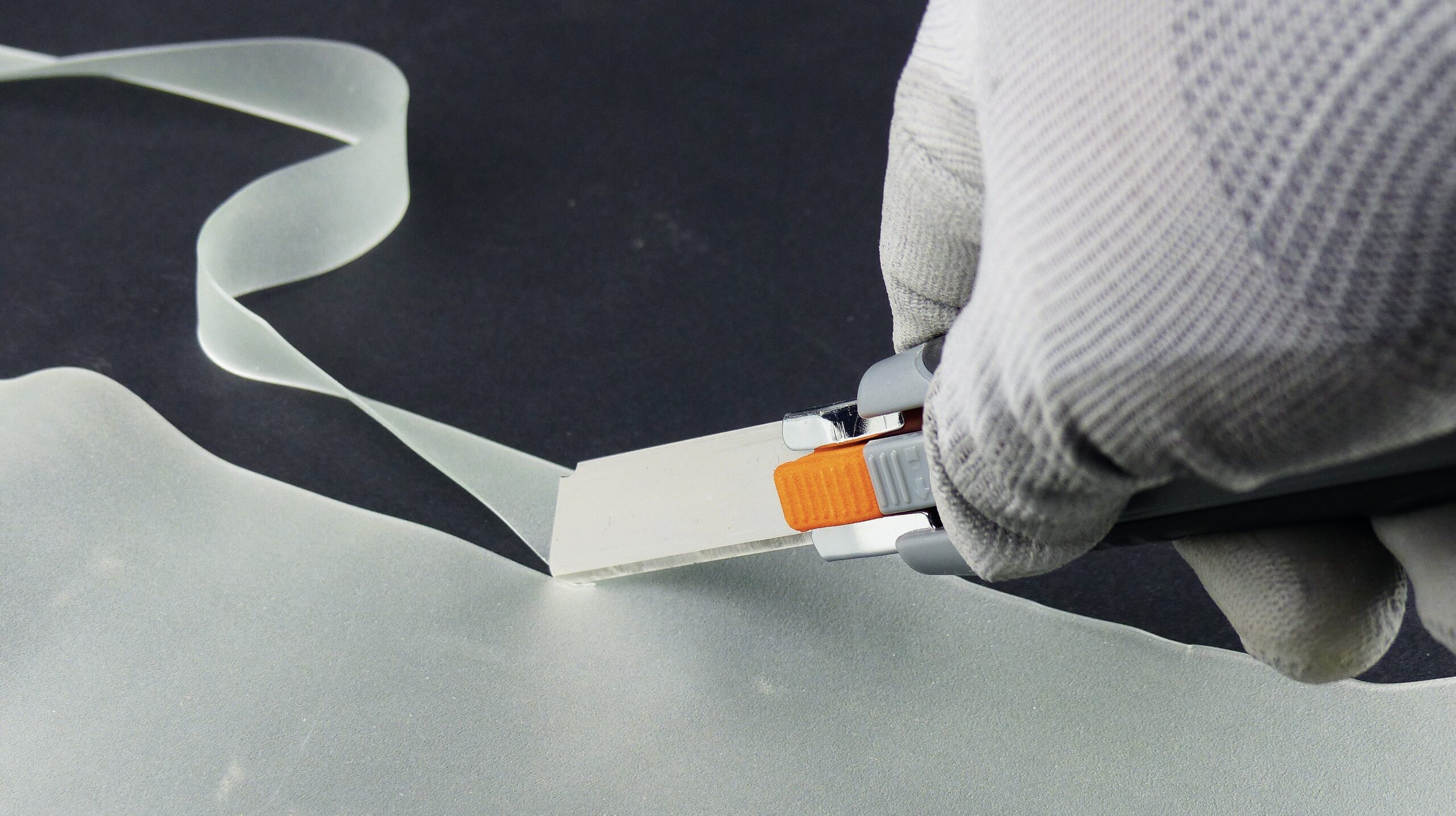
Which utility knife blade for which material?
Selecting the appropriate blade for a utility knife is crucial for achieving a precise and efficient cut.
Whether you are working with cardboard, plastic, or textiles, each material requires a specific blade to ensure clean and safe cutting operations.
Using an unsuitable blade can not only damage the material but also elevate the risk of accidents.
In this article, we explain how to choose the ideal cutter blade depending on the material you want to cut.
Criteria for choosing a suitable cutter blade
Blade selection depends on several criteria:
- The type of material to cut: each material has its own cutting requirements.
- The desired precision: certain blades allow for finer and more detailed cuts.
- Durability: some blades, such as ceramic ones, offer an extended service life, but are also more brittle and prone to breaking upon impact, for example if dropped on the floor.
- Safety: choosing a cutter with a retraction system or a rounded-tip blade helps reduce the risk of injury.
Steel blades are the most widely used: they offer a good compromise between durability and strength. However, these characteristics depend on the frequency and manner in which the blade is used.
Cutter blade types and their applications by material
Here are the different types of blades and their applications:
Steel blade

Versatile, it is ideal for cardboard, leather, and soft materials.
Steel hook blade
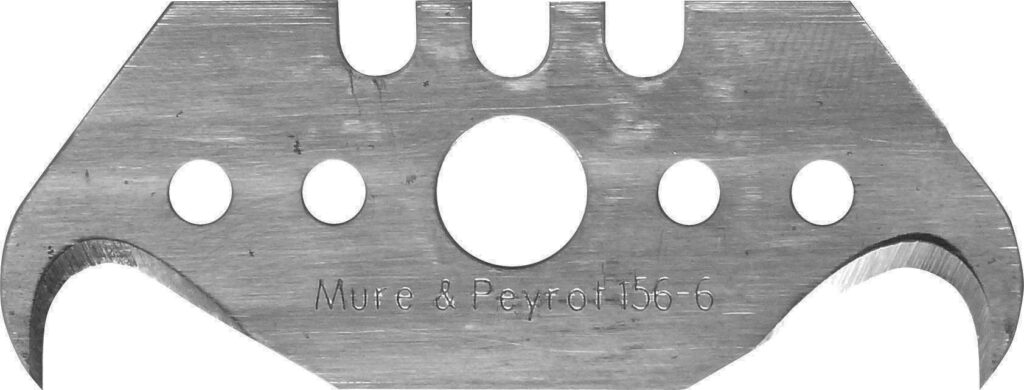
Designed for cutting flexible materials such as linoleum, carpets, or leather, it ensures a more precise cut and prevents surface damage.
Ceramic blade

The ceramic blade offers an extended service life. It is suitable for deburring plastic materials (PVB, EVA, etc.) used in the manufacture of architectural glass or vehicle windshields.
Hook blade
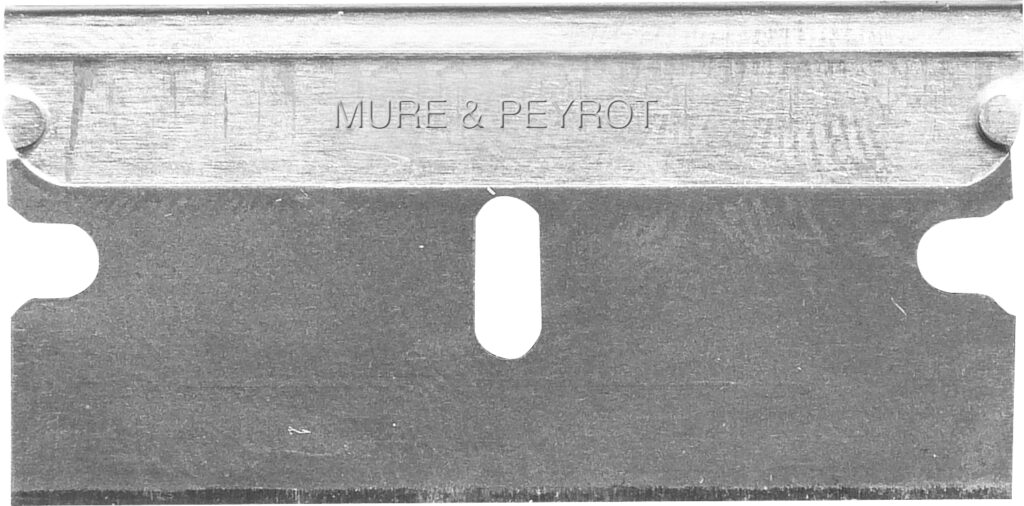
Ideal for deburring PVB found in glass products, such as windshields or laminated windows.
Plastic blade
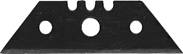
The best solution to prevent damaging the surface, ideal for deburring hard or flexible plastic objects.
Stainless steel blade
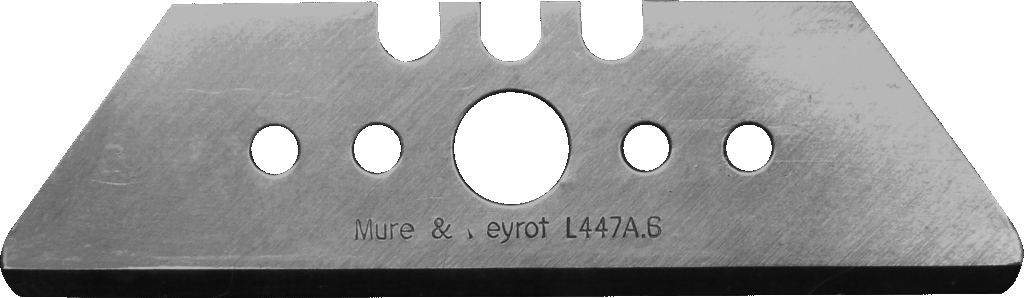
Specific to the agri-food industry, it is available in our range of food-grade and detectable blades.
Scalpel Blades
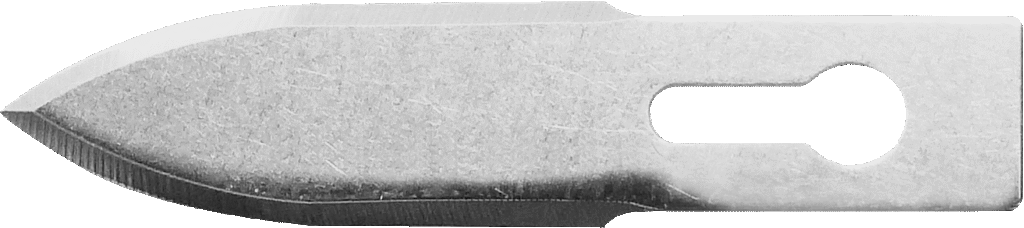
For precision work and cutting plastic materials, cardboard, and paper.
Summary table of compatible blades and materials
| Materials | Recommended Blade Type |
|---|---|
| Single and Double Wall Corrugated Cardboard | Steel |
| Carpets, Rugs, Textiles | Steel hook and trapezoidal |
| Plastic Films | Steel |
| Packaging Adhesives | Steel |
| Bread Dough (Food Grade) | Stainless Steel Scarifying Blade |
| PVB | Steel, ceramic, plastic, and hook blade |
Mistakes to avoid when choosing your blade
- Using a dull blade: this leads to uneven cuts and increases the risk of injury.
- Choosing the wrong blade for the material: an unsuitable blade can damage the substrate and cause premature tool wear.
- Neglecting safety: always use a cutter equipped with a protective system and handle blades with care.
- Not maintaining your cutter: clean it and replace blades regularly to ensure optimal cutting performance.
Safety and ergonomics: a major priority
In many professional industries, accident prevention is a priority. Using a safety cutter significantly reduces the risk of injury. These tools are often equipped with automatic or semi-automatic retraction mechanisms, such as the automatically retractable cutter, for safer handling.
In addition, knowing how to choose a cutter adapted to your trade is essential to boost productivity and ensure user well-being.